David Bowie: Omikron: The Nomad Soul
Part science fiction, part detective story, and part philosophical journey, Omikron: The Nomad Soul remains one of the most ambitious interactive worlds ever created—and one of David Bowie’s most unexpected creative collaborations.
By: Joe Chopski
Estimated Reading Time: 30 minutes
Long before games became synonymous with cinematic storytelling, Omikron: The Nomad Soul quietly created a living world that rewarded curiosity, patience, and observation—and David Bowie helped give it a soul.
Released in 1999, Omikron: The Nomad Soul was an ambitious debut from French developer Quantic Dream. It blended first-person exploration, third-person action, detective fiction, role-playing mechanics, and an original David Bowie soundtrack into a single experience. At the time, there was simply nothing else quite like it.
Years before Heavy Rain, Detroit: Become Human, and the modern wave of narrative-driven games, Omikron attempted something far more ambitious than creating a futuristic setting. It imagined an entire civilization—its architecture, politics, religion, music, technology, and culture—as a place players were meant to inhabit rather than simply pass through.
More than twenty-five years later, that ambition remains remarkable.
Experience
There are games you complete.
Then there are games you experience.
The difference becomes apparent almost immediately.
During my first playthrough of Omikron, I spent nearly an hour wandering the streets of Qalisar searching for a single witness. I stepped into bars that had nothing to do with the investigation, wandered into restaurants simply because they existed, repaired a damaged police SNEAK, carried forensic evidence through crowded streets, and overlooked a tiny surgical instrument that completely halted the investigation until I finally discovered it.
None of those moments felt like failures.
They felt like detective work.
That distinction may be Omikron’s greatest achievement.
The game rarely rushes the player. Instead, it rewards observation. It expects you to pay attention to conversations, remember locations, examine evidence, and gradually understand the rhythm of its world. Long before glowing objective markers and constant navigation became standard, Omikron trusted players to slow down, think, and explore.
It wasn’t always easy.
But it was unforgettable.
Perhaps that is why Omikron: The Nomad Soul continues to fascinate players decades after its release. It isn’t remembered simply because David Bowie appears in it or because it was technologically ambitious for its time. It endures because it asks something different of the player. It invites you to observe, investigate, and lose yourself in a world that feels less like a game and more like a place waiting to be discovered.
The City of Omikron
Every memorable work of science fiction begins with a believable world.
Omikron succeeds because it feels less like a collection of levels and more like a functioning city. People work, shop, travel, eat, argue, and go about their daily lives whether the player is paying attention or not. Apartment buildings tower above crowded streets. Restaurants sit beside bars, police stations, and businesses. Televisions broadcast news, advertisements fill public spaces, and conversations between strangers help shape the personality of the city.
Nothing feels randomly placed.
Every district possesses its own identity, encouraging exploration rather than simply guiding players from one objective to the next.
As I wandered through Qalisar during my investigation, I frequently found myself taking wrong turns. At first, this felt frustrating. Eventually, I realized that getting lost was part of the experience. Every incorrect street led to another storefront, another conversation, another discovery that made Omikron feel more authentic.
The city doesn’t exist merely as a backdrop for the story.
It is one of the story’s main characters.
That design philosophy remains surprisingly uncommon, even today. Many modern games offer worlds that are significantly larger, but few create the illusion that those worlds exist independently of the player’s actions. Omikron often achieves that illusion with far fewer technological resources, relying instead on thoughtful world-building and careful environmental design.
Long before open worlds became filled with icons, objective markers, and constant notifications, Omikron trusted players to explore on their own. It rewarded curiosity instead of urgency, allowing the city itself to become one of the game’s greatest mysteries.
Detective Work
Most games place the player at the center of the action.
Omikron places the player at the center of an investigation.
That distinction changes everything.
Rather than relying on constant action or spectacle, the game asks players to observe their surroundings, listen carefully to conversations, examine evidence, and make connections. Progress isn’t always measured by defeating an enemy or reaching the next checkpoint. More often, it comes from noticing a detail that was there all along.
The investigation unfolds at a deliberate pace. Witnesses must be located. Evidence must be examined. New locations slowly reveal themselves through conversations instead of objective markers. Every discovery feels earned because the game rarely gives away the answer.
There were moments during my first playthrough when I questioned whether I had overlooked something important.
Usually, I had.
A single surgical instrument left behind at a crime scene brought my investigation to a complete stop until I returned and searched the area more carefully. What initially felt like frustration eventually became appreciation. Omikron wasn’t wasting my time. It was teaching me how to think like a detective.
That philosophy extends throughout the experience.
The game rewards patience over speed, observation over instinct, and curiosity over convenience. It trusts players to solve problems through careful exploration rather than constant direction.
In many ways, Omikron feels less concerned with winning than with understanding. Every conversation, every location, and every clue contributes to the feeling that you are slowly uncovering the truth rather than simply completing another mission.
That approach remains one of the game’s most distinctive achievements, proving that mystery is often at its most compelling when players are allowed to discover the answers for themselves.
David Bowie
It would be easy to describe David Bowie’s involvement in Omikron as a celebrity appearance.
It was far more meaningful than that.
By the late 1990s, Bowie had already spent decades redefining what it meant to be an artist. Music was only one part of his creative identity. He embraced film, theater, visual art, fashion, and emerging technology with the same curiosity that had shaped his career from the beginning.
Omikron offered something few games of its era could.
It wasn’t asking Bowie to license a song or make a brief cameo.
It invited him to become part of an entirely new universe.
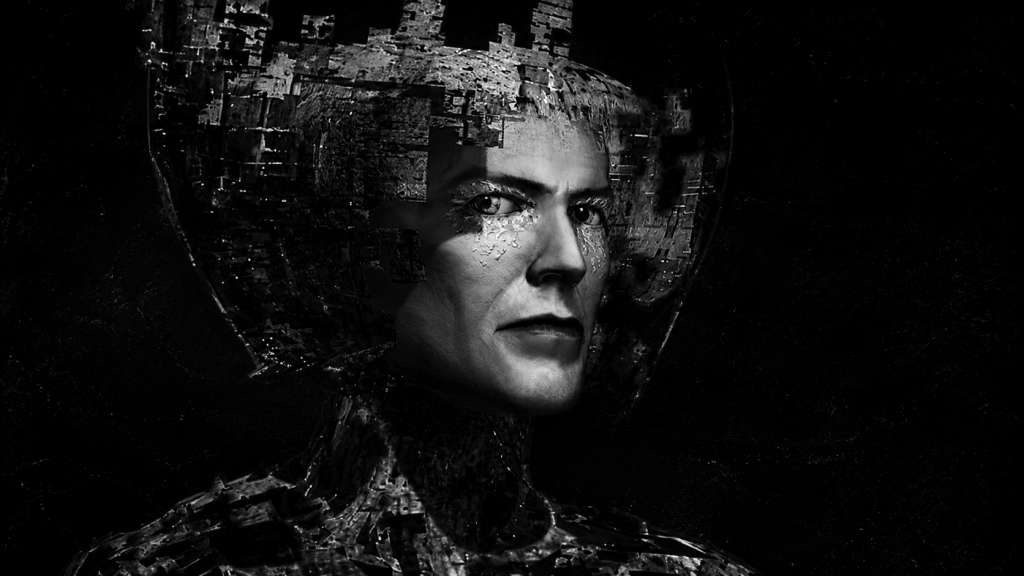
Within Omikron, Bowie and guitarist Reeves Gabrels appear as members of the fictional band The Dreamers, performing music that feels woven into the culture of the city rather than simply added as a bonus feature. Their presence doesn’t interrupt the experience. It expands it.
That creative partnership reflected Bowie’s lifelong fascination with new forms of artistic expression. Throughout his career, he consistently looked beyond traditional boundaries, exploring technologies and ideas long before they became commonplace. Interactive entertainment represented another creative frontier, and Omikron gave him an opportunity to experiment in a medium that was still discovering its own artistic voice.
Looking back today, Bowie’s participation feels surprisingly natural.
Omikron was never content to be a conventional video game.
Neither was David Bowie.
Together, they created something that still feels remarkably unconventional more than two decades later—not because it followed the trends of its time, but because it was willing to imagine something entirely different.
Quantic Dream
Every ambitious work of art begins with a creative risk.
For Quantic Dream, Omikron: The Nomad Soul was that risk.
Founded by David Cage in the late 1990s, the French studio entered the industry with an idea that felt almost impossible to achieve. Rather than building a game around a single genre, the team envisioned an interactive world where storytelling, exploration, combat, music, and investigation could coexist within the same experience.
It was an extraordinary level of ambition for a first major release.
Omikron shifts effortlessly between perspectives, asking players to investigate crime scenes, engage in hand-to-hand combat, explore futuristic cityscapes, interact with ordinary citizens, and occasionally question everything they think they understand about the world around them. Instead of feeling like separate systems stitched together, these elements exist to support a larger vision.
That vision was immersion.
The goal was never simply to entertain players for a few hours. It was to create the illusion of another reality—one that continued to exist beyond the player’s immediate actions.
Looking back, it is easy to recognize ideas that Quantic Dream would continue exploring throughout its later work. The studio’s commitment to cinematic storytelling, meaningful choices, believable performances, and emotional engagement can all be traced back to Omikron. While those ideas would later become defining characteristics of games such as Heavy Rain, Beyond: Two Souls, and Detroit: Become Human, their foundation was already present here.
Not every experiment succeeds perfectly.
Innovation rarely does.
But Omikron remains fascinating because it was willing to attempt ideas that many developers would not seriously pursue until years later. It challenged expectations of what interactive storytelling could become, leaving behind a creative legacy that extends far beyond its original release.
Sometimes the most important works are not the ones that perfect an idea.
They are the ones bold enough to introduce it.
Legacy
Some works of art become influential because they achieve immediate success.
Others quietly wait to be rediscovered.
Omikron: The Nomad Soul belongs to the second category.
More than two decades after its release, the game remains remarkably difficult to define. It isn’t remembered solely as a science-fiction adventure, a detective story, a role-playing game, or a technological experiment. It is remembered because it attempted to combine all of those ideas into a single experience without compromising its identity.
Time has a way of changing how we evaluate ambitious work.
Ideas that once seemed unconventional often become commonplace years later. Looking back from the present, many of Omikron’s creative ambitions feel surprisingly modern. Seamless storytelling, cinematic presentation, environmental world-building, and meaningful player involvement have all become central to contemporary game design. Omikron explored many of those possibilities long before they became industry expectations.
Its influence cannot always be measured by sales figures or awards.
Sometimes influence is measured by the conversations a work continues to inspire.
Even today, players return to Omikron not simply to relive a favorite game, but to revisit an experience unlike anything else. They return to wander its streets, listen to its music, question its mysteries, and appreciate a vision that refused to fit comfortably within established boundaries.
There is something refreshing about a work that asks its audience to slow down.
To pay attention.
To become curious again.
That may be Omikron’s greatest achievement.
It reminds us that discovery is one of the most rewarding experiences art can offer.
Final Thoughts
There is a tendency to judge creative works solely by their commercial success or their place in popular culture.
Omikron: The Nomad Soul deserves to be approached differently.
It represents a moment when a group of artists set out to create something without knowing whether the medium—or the audience—was ready for it. They borrowed ideas from science fiction, detective fiction, cinema, music, philosophy, and interactive storytelling, then combined them into a world that refused to fit comfortably into a single category.
That willingness to experiment is what makes Omikron endure.
Playing it today is not simply an opportunity to revisit a game from 1999. It is an opportunity to experience a creative vision that challenged expectations long before many of its ideas became commonplace.
Not every moment has aged perfectly.
Few ambitious works do.
But great art is rarely defined by perfection.
It is defined by imagination.
Omikron reminds us that the most rewarding journeys are often the ones that ask us to slow down, pay attention, and discover meaning for ourselves. It trusts curiosity instead of convenience. Observation instead of urgency. Questions instead of easy answers.
Perhaps that is why the game continues to inspire discussion more than two decades after its release.
Its greatest achievement is not that it predicted the future.
Its greatest achievement is that it still feels willing to explore it.
As DARKWAVE continues to examine the people, places, and works that have shaped art, culture, and imagination, Omikron: The Nomad Soul stands as a reminder that some of the most fascinating experiences are not the loudest or the most celebrated. They are the ones waiting quietly to be rediscovered by those willing to take the first step.
Sometimes the most important works are not the ones that perfect an idea.
They are the ones bold enough to introduce it.
About the Author
Joe Chopski is a singer-songwriter, filmmaker, record producer, and founder of DARKWAVE Magazine. His work explores the intersection of music, film, visual art, and cultural history through carefully researched, long-form features. His research focuses on the stories behind influential artists, forgotten works, creative movements, recording techniques, filmmaking, and the ideas that continue to shape culture. Through DARKWAVE Magazine, he invites readers to look beyond the surface and discover the history, craftsmanship, and imagination behind the art that inspires us. About DARKWAVE Magazine
DARKWAVE Magazine explores music, film, culture, history, literature, architecture, folklore, and the ideas that continue to shape our world long after trends have faded.
Rather than asking whether something is good or bad, we ask why it matters.
Through original, research-driven features, DARKWAVE examines the artists, movements, and works that continue to influence generations of creators and audiences alike.
Our mission is simple:
To explore the misunderstood.
Because every story has a history.
And every history has another story waiting to be discovered.