Oni: Japan’s Demons Before Horror Cinema
Long before Japan terrified audiences with ghost stories on film, it gave the world one of its oldest and most enduring supernatural figures. Part monster, part moral lesson, and part cultural mirror, the oni has haunted Japanese folklore for more than a thousand years. To understand Japanese horror, you first have to meet the demon that came before the camera.
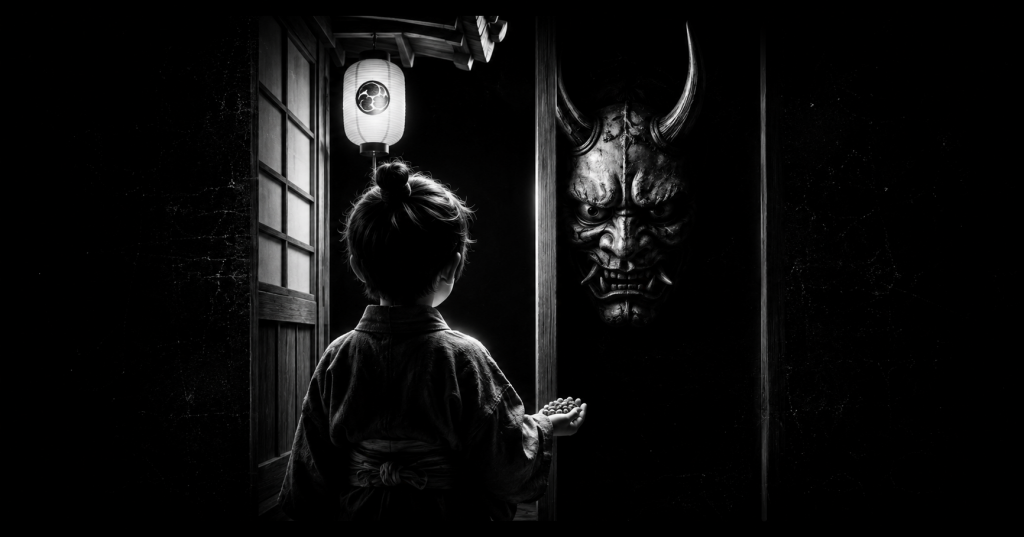
By: Joe Chopski
Estimated Reading Time: 25-30 minutes
Chapter One
What Is an Oni?
I’ve always believed that every culture leaves behind clues about what it fears most.
Sometimes those fears become paintings. Sometimes they become songs. Sometimes they become architecture. And sometimes they become monsters.
Long before movie theaters existed, before special effects, before anyone could experience fear from the safety of a seat with popcorn in their hands, people told stories. They gathered around fires, walked home beneath dark skies, and passed down legends that explained the things they couldn’t understand. Those stories survived because they meant something. They reflected the hopes, anxieties, and imagination of the people who created them.
Japan’s oni is one of those stories.
If you’ve ever watched Japanese cinema, explored anime, played a video game developed in Japan, or wandered through a museum filled with ancient woodblock prints, you’ve probably seen an oni. You may not have known its name, but you would recognize it immediately: towering horns, fierce eyes, wild hair, sharp teeth, powerful muscles, and an enormous iron club carried with effortless strength.
At first glance, the English word demon seems like the easiest translation.
It also happens to be one of the least accurate.
When many people hear the word demon, they imagine a creature that represents pure evil. The oni doesn’t fit quite so neatly into that definition. Across centuries of Japanese folklore, religion, literature, and theater, the oni has worn many faces. It has been a destroyer, a punisher, a guardian of hell, a symbol of disaster, and in some stories, even a tragic figure shaped by human emotion. Like the greatest myths, it refuses to stay inside a single definition.
Maybe that’s why the oni has survived for more than a thousand years.
The most enduring legends aren’t the simplest ones. They’re the stories that continue to evolve because every generation finds something new inside them.
One of the ideas you’ll notice throughout this article is that monsters rarely appear out of nowhere. They grow alongside civilizations. They absorb new beliefs, new religions, new fears, and new ways of seeing the world. In many ways, myths are no different than people.
We are a product of our path.
The oni is a product of Japan’s path.
Its story stretches across ancient folklore, Buddhist teachings, medieval warfare, theater, painting, festivals, literature, and eventually the silver screen. Every era left its mark. Every generation added another layer until the oni became something far greater than a monster hiding in the mountains.
It became one of the defining symbols of Japanese culture.
And like all great symbols, the more closely you examine it, the more complicated it becomes.
Before we can understand how the oni inspired generations of filmmakers and artists, we first have to understand where it came from.
Because every legend has an origin.
And every shadow begins with a source of light.
Chapter Two
Origins in Folklore and Religion
One of the biggest mistakes we can make when studying folklore is assuming that myths appear overnight.
They don’t.
Like music, architecture, or language, folklore evolves. It borrows ideas, absorbs new influences, and changes with every generation that inherits it. If you traced the history of almost any legendary creature far enough, you would find that it wasn’t created in a single moment. It was shaped over centuries.
The oni is no exception.
To understand where the oni came from, we have to step back more than a thousand years, to a Japan that looked very different from the one we know today.
Before Buddhism arrived, Japan’s spiritual life centered around what we now call Shinto, an indigenous belief system rooted in nature. Mountains, rivers, forests, storms, and remarkable places were understood to possess spiritual significance. The world was alive with unseen forces, some benevolent and others unpredictable. Rather than dividing existence into simple categories of good and evil, these beliefs recognized that nature itself could nurture life one season and destroy it the next.¹
Early Japanese texts also speak of mysterious beings associated with darkness, disease, misfortune, and the unknown. These figures were not yet the horned giants that modern audiences recognize, but they reveal an important truth: long before the oni had a face, it already existed as an idea.²
Then came one of the most important cultural exchanges in Japanese history.
Beginning in the sixth century, Buddhism entered Japan through the Korean Peninsula, bringing with it not only a new religion but an entirely different vision of the afterlife. Buddhist scriptures described multiple realms of existence, including elaborate hells where sinners faced punishment for the choices they had made during life. Guarding these infernal landscapes were terrifying supernatural beings whose appearance and purpose gradually blended with Japan’s older spiritual traditions.³
Folklore rarely replaces what came before it.
Instead, it layers.
The result was something uniquely Japanese.
Over time, indigenous beliefs, Buddhist cosmology, and elements of Chinese philosophy intertwined, gradually shaping the creature we now recognize as the oni. This process of cultural blending became one of the defining characteristics of Japanese history.⁴
That idea fascinates me.
We often imagine cultures as isolated, but history tells a different story. Civilizations are constantly learning from one another. Art inspires art. Religion influences folklore. Stories cross oceans just as people do. What emerges isn’t a copy of the past—it’s something entirely new.
The oni became exactly that.
By the Heian period (794–1185), oni had become familiar figures in literature and illustrated scrolls. They haunted mountain passes, remote temples, abandoned roads, and the edges of civilization itself. Sometimes they devoured travelers. Sometimes they punished the corrupt. Sometimes they served as reminders that greed, violence, and unchecked ambition carried consequences beyond the physical world.⁵
Notice where these stories often take place.
Not in cities.
Not in crowded marketplaces.
But in forests, mountains, caves, and lonely roads.
Places where certainty disappears.
As a filmmaker, I’ve always been drawn to locations that tell part of the story before a single line of dialogue is spoken. David Lynch understood that. Tim Burton understands it too. The setting becomes another character. Ancient storytellers knew this instinctively. Long before cinema existed, they were using landscape to create tension. A dark mountain trail becomes far more unsettling when everyone believes something might be watching from beyond the trees.
The oni didn’t simply inhabit those places.
It transformed them.
A mountain was no longer just a mountain.
A forest was no longer just a forest.
They became places where the visible world met the invisible one.
That may be one of the reasons the oni has never disappeared.
Its appearance has changed over the centuries. Artists gave it horns. Writers gave it names. Theater gave it movement. Cinema eventually gave it sound and motion.
But its purpose has remained remarkably consistent.
The oni reminds us that the unknown has always lived just beyond the edge of the firelight.
And every generation imagines that darkness a little differently.
Chapter Three
The Oni Takes Shape
Every monster has a face.
Not because monsters need one, but because people do.
The unknown is difficult to imagine. Give it horns, however, and suddenly it becomes recognizable. Give it sharp teeth, wild hair, burning eyes, and a weapon large enough to crush stone, and fear becomes something you can paint, carve into wood, perform on a stage, or eventually project onto a movie screen.
The oni did not always look the way we picture it today.
Its appearance evolved gradually, shaped by centuries of storytelling, religious symbolism, and artistic interpretation. Some of the earliest descriptions of oni are surprisingly vague. They were frightening, certainly, but not always depicted with the unmistakable features we now associate with them. Over time, artists gave the unseen a body, and that body became one of the most recognizable images in Japanese folklore. According to the National Diet Library of Japan’s digital collections, medieval illustrated scrolls reveal how these visual traditions developed over hundreds of years.¹
The horns are usually the first thing people notice.
They immediately separate the oni from humanity, suggesting something ancient, untamed, and beyond ordinary experience. Yet the horns are only one part of a much larger visual language.
The creature’s skin is often painted red or blue.
Red oni have become especially common in Japanese art, although blue, black, and even green oni also appear throughout folklore and theatrical traditions. Rather than representing different species, these colors often carry symbolic meaning, reflecting emotion, morality, suffering, or supernatural power depending on the story being told. Modern depictions vary considerably, reminding us that folklore rarely follows a single set of rules. Folklorist Noriko T. Reider discusses this evolution in Japanese Demon Lore, one of the definitive modern studies of the subject.²
Then there is the weapon.
The kanabō, an enormous iron club covered in heavy spikes, became so closely associated with the oni that it inspired a Japanese proverb: oni ni kanabō—literally, “an oni with an iron club.” The expression describes someone who is already powerful receiving an even greater advantage, much like saying, “adding fuel to the fire,” except with admiration instead of catastrophe. Today the phrase is still used in everyday Japanese conversation, long after the original legends were first told. The proverb is documented in major Japanese language references, including Jisho.org’s Japanese dictionary.³
Perhaps my favorite detail is the tiger-skin loincloth.
At first it seems oddly specific.
Why a tiger?
Japan has no native wild tigers.
The answer lies beyond Japan itself.
According to scholars of Japanese folklore, the image reflects the influence of Chinese cosmology, where the northeast direction was traditionally known as the “Demon Gate,” or Kimon. That direction was symbolically associated with both the ox and the tiger. Over time, artists combined those symbols into a single creature, giving the oni ox-like horns and a tiger-skin garment. Once you know the story, the design suddenly feels intentional rather than decorative. One of the clearest discussions of this symbolism appears in research by the International Research Center for Japanese Studies and other academic studies of medieval folklore.⁴
It’s details like these that remind me why I enjoy studying folklore.
Nothing is accidental.
Someone made these choices.
Someone decided that the horns mattered.
Someone decided the club should be iron.
Someone painted the creature red.
Someone draped tiger skin across its shoulders.
Then another generation inherited those decisions, adding a few of its own before passing the legend forward once again.
That’s how myths survive.
Not by remaining unchanged…
But by changing just enough.
As centuries passed, the oni became larger than the stories that first gave it life. It stepped out of religious texts and into painted scrolls. It appeared in Noh performances, Kabuki theater, folding screens, woodblock prints, and eventually the moving images of cinema. Every artist who painted an oni left behind a slightly different face, yet somehow we still recognize it instantly.
The greatest monsters don’t remain trapped inside a single story.
They become part of a culture’s imagination.
And once that happens…
They’re almost impossible to forget.
Chapter Four
Shuten-dōji: The Demon of Mount Ōe
Every culture has one story that seems larger than all the others.
For Scotland, it may be the Loch Ness Monster.
For England, perhaps the legend of King Arthur.
For Transylvania, Dracula has become inseparable from the landscape itself, even though the vampire we know today owes as much to literature as it does to folklore.
Japan has many legendary creatures.
But when the conversation turns to oni, one name rises above the rest.
Shuten-dōji.
His name roughly translates to “Little Drunkard,” though there is very little about the legend that feels small.
According to medieval Japanese tales preserved in works such as the Ōeyama Ekotoba (“Illustrated Tales of Mount Ōe”), Shuten-dōji lived deep within the mountains northwest of Kyoto. From his stronghold, he and his band of oni terrorized the countryside, abducting travelers, attacking villages, and carrying noblewomen back to their hidden fortress. The story survives in beautifully illustrated handscrolls preserved by institutions including the National Diet Library of Japan and has been studied extensively by folklorists such as Noriko T. Reider.¹
The mountains matter.
Folklore often places its greatest monsters just beyond the edge of civilization.
There is something deeply human about that.
We tend to imagine danger existing somewhere outside the places we know best. Beyond the village. Beyond the city gates. Beyond the last familiar road. Once the trees begin to close in and the light starts to disappear, imagination fills the silence long before anything else does.
That’s where Shuten-dōji waited.
The emperor eventually turned to one of Japan’s greatest legendary warriors, Minamoto no Yorimitsu, better known as Raikō, to end the terror. Rather than charging into battle, Raikō and his companions disguised themselves as traveling monks, carrying gifts of sake to the demon’s mountain fortress. The plan depended not only on courage, but on deception.
It worked.
Shuten-dōji accepted the travelers, drank heavily, and eventually fell into a supernatural sleep after unknowingly consuming drugged sake prepared with divine assistance. Only then did Raikō and his companions strike.
Even that wasn’t enough.
According to the legend, after Shuten-dōji’s head was severed, it continued to move. The demon’s decapitated head lunged forward and clamped its jaws onto Raikō’s helmet, attempting one final attack before finally being subdued. It is one of the most unforgettable images in Japanese folklore, and one that artists returned to again and again over the centuries. The story has inspired Noh theater, Kabuki, woodblock prints, novels, manga, anime, and modern film adaptations. A concise historical overview is available through Encyclopaedia Britannica’s article on Shuten-dōji.²
It’s easy to read this as a monster story.
But I don’t think that’s why it has survived.
At its heart, the tale is about confronting chaos.
Every civilization tells stories about the struggle between order and disorder. Sometimes that conflict appears as a dragon. Sometimes as a giant. Sometimes as a supernatural force that lives beyond the horizon.
Japan imagined that conflict as an oni.
What fascinates me is that Shuten-dōji is rarely portrayed as mindless.
He is intelligent.
Charismatic.
Capable of leading others.
He rules rather than simply destroys.
That complexity is one of the reasons the legend continues to resonate. The greatest villains are rarely frightening because they’re powerful.
They’re frightening because they think.
Centuries after these stories were first told, artists continue to reinterpret Shuten-dōji. Every generation discovers him again through a different medium. One century painted him onto silk scrolls. Another carved him into woodblock prints. Today he appears in films, graphic novels, television, and video games.
The medium changes.
The mountain remains.
And somewhere, just beyond the last lantern, the old demon is still waiting.
Chapter Five
Keeping the Demons Away
Imagine being a child in Japan.
Winter is beginning to loosen its grip. The air still carries a chill, but spring is close enough that you can almost feel it. Your family gathers near the entrance of the house. In one hand, you hold a small handful of roasted soybeans. Standing in the doorway is a figure wearing the face of an oni.
At least…
You hope it’s only a mask.
Then someone calls out words that have echoed through Japanese homes for generations.
“Oni wa soto! Fuku wa uchi!”
“Demons out! Good fortune in!”
The beans fly.
Laughter follows.
The oni retreats.
And for another year, the household is symbolically cleansed of misfortune.
Unlike many ancient traditions that survive only in books or museums, Setsubun is still celebrated throughout Japan today. Families, schools, temples, and shrines participate in rituals that welcome good fortune while driving away symbolic evil. According to the Japan National Tourism Organization (JNTO), bean-throwing ceremonies remain one of the country’s most recognizable seasonal traditions, drawing visitors from around the world each year.¹
There’s something beautiful about that.
So many of the stories we’ve explored throughout this article belong to the distant past. They survive in faded scrolls, weathered paintings, and centuries-old manuscripts.
But Setsubun is different.
It isn’t something people simply remember.
It’s something they do.
Folklore becomes much more interesting when it leaves the pages of a book and enters someone’s home.
The roasted soybeans, known as fukumame, are believed to symbolically purify the home by driving away evil spirits and inviting prosperity. In many households, the oldest male traditionally wears an oni mask while children gleefully pelt him with beans. At temples throughout Japan, priests, local celebrities, athletes, and community leaders often participate in large public ceremonies that attract thousands of spectators. The tradition continues to evolve while remaining deeply connected to its historical roots. The Japan National Tourism Organization’s Setsubun guide provides an excellent overview of how these celebrations continue today.²
I think traditions like this reveal something important about folklore.
The goal was never simply to frighten people.
Fear was only one piece of a much larger story.
Every culture develops rituals that help people feel prepared for the uncertainties of life. Some light candles. Some ring bells. Some offer prayers. Others throw beans at imaginary demons.
When you look beyond the surface, they’re all trying to answer the same question.
How do we protect the people we love from the things we cannot control?
That’s a question every generation asks.
Maybe that’s why the oni has survived.
It reminds us that darkness is part of life.
As I read about Setsubun, I couldn’t help but think about something that has always fascinated me in cinema.
The best horror films rarely spend all of their time inside the darkness.
They give us moments of warmth.
Moments of laughter.
Moments where families gather around a table or children play without fear.
Those moments matter because they remind us what is worth protecting.
Without light…
Darkness loses its meaning.
Perhaps that’s the quiet lesson hidden inside Setsubun.
The oni may always exist somewhere beyond the doorway.
But every spring, families choose hope anyway.
And maybe that’s the bravest tradition of all.
Chapter Six
From Scrolls to Stage
Long before the oni appeared in horror films, it lived in paint.
It lived in ink.
It lived in silk.
For centuries, Japanese artists brought these supernatural figures to life in emaki—illustrated handscrolls that unfolded one scene at a time. Reading one of these scrolls wasn’t unlike watching a film. As the paper slowly unrolled from right to left, the story revealed itself frame by frame. According to the Tokyo National Museum, narrative picture scrolls became one of Japan’s most important storytelling traditions, combining painting, calligraphy, and literature into a single experience.¹
I’ve always found that fascinating.
Cinema didn’t invent visual storytelling.
It inherited it.
Thousands of years before projectors illuminated movie screens, artists were already thinking about pacing, composition, suspense, and movement. They simply used paper instead of film.
The oni was one of the great beneficiaries of that tradition.
Each generation imagined it a little differently.
Some artists painted terrifying giants towering above terrified villagers. Others gave the creatures expressions that bordered on the human—angry, sorrowful, even conflicted. No two artists saw the oni in exactly the same way, yet every interpretation added another layer to its identity.
Eventually, the demon stepped off the scroll.
It walked onto the stage.
In Noh theater, one of Japan’s oldest surviving dramatic traditions, carved masks transformed performers into gods, spirits, ghosts, and oni. Rather than relying on elaborate scenery, Noh invited audiences to imagine what lay beyond the stage. A single mask, a measured movement, and a few carefully chosen words could create an entire world. The history of Noh and its enduring use of supernatural characters is documented by UNESCO’s Intangible Cultural Heritage program.²
Centuries later, Kabuki embraced many of the same legends but with an entirely different energy.
Where Noh was restrained, Kabuki became bold.
Where Noh suggested, Kabuki declared.
Bright costumes, dramatic makeup, elaborate fight choreography, and mechanical stage effects transformed familiar folklore into spectacular performances. Oni remained a favorite subject because they offered actors something every performer enjoys—a larger-than-life character capable of commanding the audience’s attention the moment they appeared.
The stories changed.
The medium changed.
The oni endured.
That’s usually a sign that we’re looking at something deeper than entertainment.
The creatures survived because they adapted.
Every generation found a new way to tell the old stories without losing what made them meaningful in the first place.
I think there’s a lesson in that.
Great stories don’t survive because they’re frozen in time.
They survive because each generation finds a new way to carry them forward.
The oni traveled from whispered folklore to painted scrolls…
From painted scrolls to wooden stages…
From wooden stages to printed books…
And eventually…
To the silver screen.
By the time Japanese horror cinema emerged in the twentieth century, audiences already knew those horns.
They already understood the club.
They already recognized the face staring back from the darkness.
The movies weren’t introducing a monster.
They were introducing an old acquaintance to a new generation.
Chapter Seven
Why the Oni Never Disappeared
Most monsters have an expiration date.
For a few years, they’re everywhere.
Books are written about them.
Films are made.
Halloween costumes fill store shelves.
Then, almost as quietly as they arrived, they begin to disappear.
The oni never did.
For more than a thousand years, it has remained part of Japan’s cultural imagination. According to the Encyclopædia Britannica overview of Japanese mythology and the work of scholars such as Noriko T. Reider, the oni has continually evolved, taking on new meanings while remaining instantly recognizable.¹
That’s unusual.
Very unusual.
Most folklore survives because historians preserve it.
The oni survived because ordinary people never stopped telling its stories.
Today you’ll find oni everywhere.
They appear in manga and anime.
They battle heroes in video games.
They decorate festival masks.
They’re carved into temple architecture.
They’re painted by contemporary artists.
They’re reimagined by filmmakers.
They’re tattooed onto skin.
The medium keeps changing.
The oni does not.
What’s remarkable is that modern audiences don’t need an explanation.
Show someone a silhouette with curved horns and an iron club, and they immediately understand they’re looking at an oni.
That’s the mark of an enduring symbol.
It has become part of a shared visual language.
I don’t think that’s because people are fascinated by monsters.
I think it’s because people are fascinated by themselves.
Folklore has always been a mirror.
Every generation looks into it and sees something different.
Sometimes the oni represents cruelty.
Sometimes temptation.
Sometimes greed.
Sometimes rage.
Sometimes it simply represents the part of ourselves we’d rather pretend doesn’t exist.
That’s one reason these stories continue to matter.
The monster isn’t always waiting in the forest.
Sometimes it’s waiting for a bad decision.
Sometimes it’s waiting for pride.
Sometimes it’s waiting for fear to make our choices for us.
That idea feels just as relevant today as it did a thousand years ago.
Technology changes.
Cities change.
The way we tell stories changes.
Human nature…
Not nearly as much.
As I was researching this article, I realized something.
The oni has survived every major shift in Japanese history.
It outlived emperors.
It outlived shoguns.
It outlived wars.
It outlived the arrival of Buddhism.
It outlived the printing press.
It outlived photography.
It outlived cinema.
It even made the transition into the digital age without losing its identity.
Very few fictional creations can make that claim.
Maybe that’s because the oni was never just a creature.
It became a language.
A way for one generation to speak to the next about choices…
Consequences…
Discipline…
And the parts of ourselves that require the most attention.
The greatest folklore doesn’t survive because it’s old.
It survives because every generation discovers that it still has something worth saying.
The oni has been speaking for centuries.
The remarkable thing…
Is that we’re still listening.
Conclusion
More Than a Monster
When I first began researching the oni, I expected to write about a demon.
Instead, I found a mirror.
Like so many figures in world folklore, the oni has worn countless faces over the centuries. It has frightened children, challenged heroes, entertained theater audiences, inspired artists, and found new life in modern cinema, literature, and video games. Yet through every generation, it has remained unmistakably itself.
That doesn’t happen by accident.
Stories survive because they continue to mean something.
The oni has never belonged to one religion, one artist, or even one period of Japanese history. It belongs to the people who kept telling its story. Every scroll that was painted, every stage performance that was remembered, every family that threw roasted soybeans during Setsubun, and every child who wondered what might be standing just beyond the doorway helped carry the legend into another century.
According to the Japan National Tourism Organization’s overview of Setsubun, the tradition continues to be celebrated across Japan today, connecting modern families with customs that stretch back hundreds of years.¹
I think that’s the real lesson.
Folklore isn’t preserved because museums decide it’s important.
It’s preserved because ordinary people choose not to let it disappear.
That may be the greatest difference between folklore and history.
History tells us what happened.
Folklore tells us what people believed mattered.
Sometimes those beliefs warned us about greed.
Sometimes they warned us about arrogance.
Sometimes they simply reminded us to pay attention to the choices we make when no one else is watching.
The oni has always represented something larger than itself.
Not because it was terrifying…
But because it asked difficult questions.
Questions every generation eventually has to answer.
As I closed the last book and finished my notes for this article, I found myself thinking less about monsters and more about storytelling.
Thousands of years from now, what stories will survive from our own time?
Which characters will still be remembered?
Which legends will still speak to people who haven’t even been born yet?
No one can answer those questions.
But I hope we continue asking them.
Because every culture leaves behind more than buildings, artifacts, and monuments.
It leaves behind stories.
Stories become traditions.
Traditions become identity.
And sometimes…
A creature with horns, carrying an iron club, still waits patiently in the shadows—not because it wants to frighten us, but because it reminds us that the oldest stories are often the hardest to outgrow.
Perhaps that’s why the oni never disappeared.
It never stopped asking us to look a little more closely.
Not at the monster.
At ourselves.
About the Author
Joe Chopski is a singer-songwriter, filmmaker, record producer, and founder of DARKWAVE Magazine.
His work explores the intersection of music, film, visual art, and cultural history, with a particular interest in the creative processes behind influential artists and landmark works. His research focuses on music history, recording techniques, production methods, filmmaking, visual storytelling, and the ideas that continue to shape generations of artists.
Through DARKWAVE Magazine, Joe Chopski and its contributing writers publish research-driven articles that explore the history, context, and creative process behind influential works of art. The magazine is built on the belief that curiosity is more valuable than criticism and that understanding the creative journey can be just as rewarding as experiencing the finished work.
Rather than publishing opinions, reviews, ratings, or rankings, DARKWAVE Magazine exists to explore how and why great art is created. The publication is founded on the belief that art is not a competition. Every artist has something to teach us, and every great work has a story worth discovering. Each article is written to inform, inspire, and encourage readers to look deeper into the people, places, ideas, and creative decisions behind enduring works of art.
As a musician and filmmaker, Chopski brings both historical research and firsthand creative experience to his writing, approaching every subject with curiosity, accuracy, and deep respect for the artists and their work.
About DARKWAVE Magazine
DARKWAVE Magazine explores music, film, culture, history, literature, architecture, folklore, and the ideas that continue to shape our world long after trends have faded.
Rather than asking whether something is good or bad, we ask why it matters.
Through thoughtful long-form journalism, DARKWAVE examines the people, places, and stories that continue to influence art, creativity, and culture. We believe curiosity is more valuable than criticism, that great art is meant to be experienced rather than judged, and that exploring the misunderstood often reveals the most enduring truths.
Because every story has a history.
And every history has another story waiting to be discovered.
References
- Encyclopædia Britannica. Japanese Religion. https://www.britannica.com/topic/Japanese-religion
- Encyclopædia Britannica. Japanese Mythology. https://www.britannica.com/topic/Japanese-mythology
- Encyclopædia Britannica. Shuten-dōji. https://www.britannica.com/topic/Shuten-doji
- Reider, Noriko T. Japanese Demon Lore: Oni from Ancient Times to the Present. Utah State University Press, 2010.
- Reider, Noriko T. “Oni.” In The Ashgate Research Companion to Japanese Folklore. Routledge.
- Foster, Michael Dylan. The Book of Yōkai: Mysterious Creatures of Japanese Folklore. University of California Press, 2015.
- Foster, Michael Dylan. Pandemonium and Parade: Japanese Monsters and the Culture of Yōkai. University of California Press, 2009.
- National Diet Library of Japan. Digital Collections. https://www.ndl.go.jp/en/
- Tokyo National Museum. https://www.tnm.jp/?lang=en
- 10.UNESCO. Nogaku Theatre – Intangible Cultural Heritage of Humanity. https://ich.unesco.org/en/RL/nogaku-theatre-00041
- Japan National Tourism Organization. Setsubun Guide. https://www.japan.travel/en/guide/setsubun/
Further Reading
If this article sparked your curiosity, these organizations and publications provide excellent opportunities to continue exploring Japanese folklore, religion, history, and traditional arts.
- National Diet Library of Japan — Digital archives, historical manuscripts, illustrated scrolls, and rare books.
- Tokyo National Museum — Japanese art, archaeology, and cultural history.
- Japan National Tourism Organization — Cultural traditions, festivals, and regional history.
- UNESCO Intangible Cultural Heritage — Traditional performing arts, including Noh theatre.
- Encyclopædia Britannica — Reliable overviews of Japanese religion, mythology, and historical figures.
- Michael Dylan Foster — One of today’s leading scholars of Japanese folklore and yōkai studies.
- Noriko T. Reider — Widely recognized for her scholarship on oni and Japanese demon lore.
Image Credits
Hero image created for DARKWAVE Magazine. Additional historical references and visual inspiration were consulted through museum collections and public cultural archives where noted.