By: Joe Chopski
Estimated reading time: 30minutes
The landmark debut album that transformed post-punk into something darker, stranger, and entirely its own. Inside the creation of one of the most influential albums in gothic rock history—and the story of how four musicians from Northampton created a work that continues to inspire generations of artists, musicians, filmmakers, and outsiders more than four decades later.
Introduction
The Record That Opened Another Room
Some albums document a band. Others create a world. In the Flat Field, released by Bauhaus in 1980, belongs to the second category.
The album arrived during a period when post-punk was still wide open. Punk had broken the rules, but the most adventurous artists were beginning to ask what could happen after that rupture. Could a rock band use horror cinema, literature, dub, glam, theatre, art-school experimentation, and stark visual design without becoming trapped by any of them? Could darkness be intelligent, elegant, physical, and strange at the same time? Could a debut album feel less like a collection of songs and more like a doorway?
Bauhaus answered those questions by refusing to sound like anyone else.
Peter Murphy, Daniel Ash, David J, and Kevin Haskins did not simply make a gothic rock record. In fact, the genre vocabulary that would later surround them had not yet settled into place. What they made was more unstable and more interesting: a record built from tension, space, theatricality, rhythm, instinct, and atmosphere. Later generations would hear the foundations of gothic rock, darkwave, industrial music, alternative rock, and post-punk revivalism inside it. But the album itself still resists being reduced to any single label.
That resistance is part of its power.
In the Flat Field remains important because it does what lasting art often does. It creates its own weather. It does not simply ask to be heard. It asks the listener to enter.
Before Bauhaus
From Northampton to Post-Punk
Before Bauhaus became one of the defining names in gothic rock, they were four young artists emerging from Northampton, England, at the end of the 1970s. That timing matters. Punk had already proved that music could be urgent, independent, and self-directed. But by 1978 and 1979, many musicians wanted to move beyond punk’s first explosion. They wanted more space, more ambiguity, more rhythm, more art, more atmosphere, and more danger.
That restless period became post-punk.
Post-punk was never one single sound. It was a permission slip. Some artists explored funk and dub. Others pushed toward electronics, minimalism, noise, art rock, poetry, or experimental production. What united the best of them was not a shared formula, but a shared rejection of inherited rules.
Bauhaus used that freedom with unusual conviction.
Northampton also gave the band a particular emotional pressure. The feeling of ordinary surroundings, boredom, escape, and the desire to transform the everyday into something charged and theatrical runs through the album. The title In the Flat Field suggests that tension: the flatness of the ordinary world, and the imaginative force required to break out of it.
By the time the group formed, each member brought something different. Peter Murphy had presence, mystery, and a voice that could move from whisper to command. Daniel Ash treated the guitar as a source of texture and disturbance. David J gave the bass melodic authority. Kevin Haskins approached rhythm with discipline, space, and imagination.
The result was not merely a band looking for a scene. It was the beginning of an artistic language.
The Formation of Bauhaus
Four Artists, One Vision
Every influential band begins with a meeting of personalities, but Bauhaus emerged from something deeper than coincidence. Formed in Northampton in 1978, the group brought together four musicians whose approaches to music, art, and performance were remarkably different yet unexpectedly compatible. Peter Murphy, Daniel Ash, David J, and Kevin Haskins did not simply assemble a rock band. They created a creative partnership that would redefine the possibilities of post-punk and help lay the foundations of what would later be called gothic rock.
Unlike groups built around a single dominant songwriter, Bauhaus functioned as a genuine artistic collective. Songs evolved through collaboration, experimentation, and a shared willingness to ignore convention. Each member approached music from a different direction, and those contrasts became one of the band’s greatest strengths. Remove any one of the four, and Bauhaus immediately becomes something else.
Murphy quickly established himself as one of rock music’s most compelling frontmen. Tall, charismatic, and impossible to ignore, he possessed a commanding baritone capable of moving between whispers, chants, theatrical narration, and explosive projection. Comparisons to David Bowie followed him, but Murphy was never simply following Bowie’s path. He developed a distinctive identity rooted in symbolism, literature, emotional ambiguity, and total commitment to performance.
If Murphy became the visual and emotional focal point, Daniel Ash became Bauhaus’ great sonic architect. Few guitarists of the post-punk era expanded the vocabulary of the electric guitar as dramatically. Rather than relying on blues-derived riffs or conventional rock solos, Ash approached the instrument almost as a sound designer. Harmonics, controlled feedback, echo, scraping techniques, unusual chord shapes, and carefully layered textures became part of his language. At various moments his guitar resembles machinery, shattering glass, whispered voices, metallic percussion, or something moving in the walls.
David J rejected the traditional role of simply reinforcing chord changes beneath the guitar. His bass lines frequently function as independent melodies, weaving around Murphy’s vocals while locking into Kevin Haskins’ drums. Rather than remaining hidden beneath the mix, the bass often becomes one of the defining voices of a Bauhaus composition.
Haskins completed the foundation with a drumming style that was disciplined, imaginative, and unusually attentive to space. Drawing from punk, dub, glam, reggae, jazz, and experimental music, he searched for rhythmic ideas rather than familiar rock patterns. Hi-hat dynamics, tom accents, cymbal color, silence, and shifting emphasis gave the band an unmistakable pulse.
One of Bauhaus’ greatest achievements was their understanding of space. Ash’s guitar never overwhelmed David J’s bass. Haskins’ drums never crowded Murphy’s voice. Every instrument occupied its own place in the arrangement, allowing the music to breathe. That sense of balance remains one of the reasons the recordings still sound modern.
Together, the four musicians built a complete artistic universe. The music, photography, typography, fashion, stage presentation, album artwork, and performances all belonged to the same mysterious world. Nothing felt accidental. Every decision strengthened the identity of Bauhaus, inviting listeners into an atmosphere somewhere between punk, art rock, German Expressionism, literature, horror cinema, performance art, and pure imagination.
Perhaps that is why the band continues to fascinate new generations. Bauhaus never seemed interested in chasing commercial expectations. They pursued originality with conviction. In doing so, they created more than songs. They created an alternate reality. Once inside, many listeners never wanted to leave.
Bela Lugosi’s Dead
The Six-Hour Recording That Changed Everything
Before In the Flat Field, before Bauhaus became one of the defining names in gothic rock, and before an entire visual and musical language began forming around them, there was “Bela Lugosi’s Dead.”
Recorded in January 1979 and released later that year as Bauhaus’ debut single on Small Wonder Records, the song remains one of the most astonishing introductions any band has ever made. Most groups announce themselves with something concise, energetic, and immediately accessible. Bauhaus chose the opposite approach. They emerged with a composition lasting more than nine minutes — a slow-burning, hypnotic work that ignored virtually every commercial expectation of a debut single.
Nothing about it sounded conventional. Nothing about it sounded temporary. It felt as though it had always existed somewhere in the shadows, simply waiting to be discovered.
The recording has become legendary partly because of how quickly it came into existence. “Bela Lugosi’s Dead” was recorded during a single six-hour session at Beck Studios in Wellingborough. A song that would become one of the founding documents of gothic rock was not assembled over weeks of expensive refinement. It emerged almost fully formed while the band was still discovering its own identity.
Sometimes great art arrives through refinement. Sometimes it arrives through instinct. This recording belongs firmly in the second category.
The opening remains one of the most recognizable in post-punk history. Kevin Haskins begins almost alone, introducing a skeletal rhythm that feels less like the start of a rock song than the opening of a ritual. Every cymbal strike, rimshot, and pause contributes to anticipation rather than immediate release. Haskins understood that tension often comes from restraint.
David J then enters with one of the most unforgettable bass lines ever recorded. Rather than merely outlining chord changes, he constructs the architecture upon which the entire composition rests. The bass moves with hypnotic confidence, repeating enough to induce a trance while introducing subtle variations that reward attentive listening.
Then Daniel Ash appears. His entrance is almost ghostlike. Rather than playing conventional rhythm guitar, he uses echo, harmonics, scraping textures, controlled feedback, and sustained notes to create an atmosphere suspended between music and sound design. Every phrase seems to emerge from darkness before dissolving back into it.
Peter Murphy’s vocal does not simply begin. It materializes. His delivery immediately establishes one of Bauhaus’ defining characteristics: the voice as performance, invocation, image, and presence. The repeated phrase “Bela Lugosi’s dead” could have become novelty in less capable hands. Murphy turns it into something strangely timeless.
He is not merely announcing the death of the actor famous for portraying Dracula. He is invoking a mythology: early horror cinema, black-and-white shadows, old theatres, velvet curtains, cemetery romance, artificial night, and the strange glamour of the undead.
The genius of the recording is discipline. Nobody overplays. Haskins leaves space. David J patiently develops the bass figure. Ash paints around the edges. Murphy enters only when the atmosphere is prepared to receive him. The song trusts suspense more than activity.
That philosophy would become central to Bauhaus. They were never simply writing dark songs. They were constructing environments. “Bela Lugosi’s Dead” feels less like a single than a location: a deserted theatre after midnight, a corridor inside a forgotten castle, a dream where time moves differently. The listener does not simply hear it. The listener enters it.
It is also important to remember that “Bela Lugosi’s Dead” was not included on the original UK release of In the Flat Field. It existed independently, almost like a mysterious invitation into the world the album would later expand. By November 1980, audiences already understood that Bauhaus were creating something unlike anything else in post-punk.
Looking back today, the recording remains astonishingly modern. There are no fashionable production tricks tying it to 1979, no obvious attempt to chase radio, and no unnecessary ornamentation. Only atmosphere, patience, confidence, and imagination.
More than four decades later, “Bela Lugosi’s Dead” still feels suspended outside ordinary time. It did not simply introduce Bauhaus. It opened the door.
Gold Nugget: Listen to the song once without focusing on the vocal. Follow only David J’s bass and Kevin Haskins’ percussion. Then listen again for Daniel Ash’s guitar textures. The track becomes a lesson in negative space: the drama comes as much from what Bauhaus refuses to play as from what they actually perform.
In the Flat Field
Creating the Album
By the summer of 1980, Bauhaus had already established themselves as one of the most original bands to emerge from Britain’s post-punk movement. “Bela Lugosi’s Dead” had become an underground sensation, while “Dark Entries” and “Terror Couple Kill Colonel” demonstrated that the group had no intention of repeating themselves. Rather than attempting to recreate the success of those singles, Bauhaus approached their debut album with a broader ambition.
They wanted to build an entire world.
In the Flat Field would not simply become a collection of songs. It would become a complete artistic statement — one that united music, atmosphere, photography, typography, performance, literature, visual art, and experimentation into a single immersive experience.
Recorded between late 1979 and the summer of 1980, much of the album was completed at Southern Studios in London after the band had returned from an extensive thirty-date British tour. Unlike many young bands recording a debut album, Bauhaus chose to produce the record themselves. It was an unusually confident decision, but it proved essential to preserving their artistic vision.
Southern Studios became more than a recording facility. It became another instrument. Echo was treated as composition. Silence became arrangement. Stereo placement became storytelling. Rather than filling every available moment with sound, Bauhaus allowed the music to breathe. Instruments appear from unexpected places, drift across the stereo image, disappear into darkness, then return.
One of the album’s most fascinating stories involves “Double Dare.” Although Bauhaus recorded a studio version, they remained dissatisfied with it. They felt it lacked the urgency of the version captured earlier for John Peel’s BBC Radio 1 programme. Rather than settling for a cleaner recording, they insisted that the Peel Session version better represented the spirit of the song.
That decision delayed the album’s release. Permission from the BBC was slowed by Musicians’ Union regulations, forcing Bauhaus to wait more than a month before In the Flat Field could finally appear. Most bands would have compromised. Bauhaus refused. The choice reveals something fundamental about their philosophy: artistic honesty mattered more than convenience.
Throughout the album, each musician continued expanding the language begun on the early singles. Haskins rejected predictable rock drumming in favor of atmosphere, dynamics, and rhythmic tension. David J composed bass lines that often function as countermelodies. Ash explored harmonics, scraping, feedback, unusual chord voicings, and echo. Murphy blended spoken word, theatrical narration, chant, whisper, and dramatic projection.
The result remains difficult to categorize. Punk, glam, dub, expressionist cinema, horror, literature, art-school thinking, and avant-garde production all coexist naturally within the record. Yet the album never feels like a collection of influences. It feels like the birth of something new.
Few debut albums reveal themselves all at once. In the Flat Field invites repeated listening. A guitar harmonic appears. A bass movement changes the emotional direction of a phrase. A hi-hat accent reshapes a section. A vocal inflection opens another door. The album’s deepest rewards often arrive after the tenth or twentieth listen rather than the first.
Bauhaus did not merely record a debut album. They constructed an artistic universe that listeners continue entering more than four decades later.
Dark Entries
The Opening Statement
Although “Dark Entries” did not appear on the original 1980 UK release of In the Flat Field, it remains impossible to understand Bauhaus’ earliest creative period without it. Together with “Bela Lugosi’s Dead” and “Terror Couple Kill Colonel,” the single forms an essential bridge between the band’s first experiments and the world they would fully realize on the album.
Released in January 1980 on 4AD, “Dark Entries” immediately demonstrated that Bauhaus had no intention of becoming prisoners of their own success. After the slow, hypnotic atmosphere of “Bela Lugosi’s Dead,” many listeners might have expected another extended exercise in gothic minimalism. Instead, Bauhaus attacked from a completely different direction.
Fast. Urgent. Angular. Explosive.
Where “Bela Lugosi’s Dead” moved like a funeral procession, “Dark Entries” charges forward with restless energy. Yet despite the dramatic change in tempo, the song remains unmistakably Bauhaus. The band’s identity never depended upon repeating one style. It rested upon a commitment to originality.
Peter Murphy later connected the lyric to Oscar Wilde’s The Picture of Dorian Gray, one of his favorite works of literature. Rather than adapting the novel directly, Murphy absorbed its themes of vanity, hidden identity, corruption, desire, and psychological darkness, transforming them into fragments of poetic imagery. Literature would become one of Bauhaus’ defining characteristics: not as decoration, but as fuel.
Musically, “Dark Entries” showcases a band operating with remarkable confidence. Haskins drives the recording forward with disciplined urgency. David J’s bass refuses to remain hidden, conversing continuously with the drums and giving the track depth beneath its speed. Ash delivers one of his finest early guitar performances, combining punk attack with harmonics, scraping textures, fractured chords, and controlled feedback. Murphy matches the band with a vocal performance full of conviction and theatrical control.
The song possesses the urgency of punk, the theatricality of glam, the spacious thinking of dub, the intellectual curiosity of art school, and the visual imagination of German Expressionism. Yet the finished result sounds unlike any of those sources individually. It sounds like Bauhaus.
Although later editions of In the Flat Field would include “Dark Entries,” its original identity as a standalone single remains significant. It proved Bauhaus were not merely following post-punk. They were expanding it. Each release challenged assumptions created by the one before it.
More than four decades later, “Dark Entries” remains one of Bauhaus’ most exhilarating recordings — not because it established a formula, but because it proved they never intended to have one.
Gold Nugget: Read a short summary of *The Picture of Dorian Gray* before playing “Dark Entries.” Then listen for how Murphy turns literary influence into mood rather than plot. The song does not retell Wilde. It absorbs Wilde’s sense of beauty, corruption, performance, and hidden self.
Double Dare
Art Rock Meets Punk
If In the Flat Field marks the beginning of Bauhaus as an album, “Double Dare” marks the beginning of Bauhaus as an experience.
As the opening track on the original 1980 release, “Double Dare” wastes no time announcing that the listener has entered unfamiliar territory. There is no welcoming introduction, no comforting melody, and no attempt to ease the audience into the record. Bauhaus opens with tension, uncertainty, and controlled aggression.
The album does not simply begin. It confronts you.
The version used on In the Flat Field was not recorded during the main Southern Studios album sessions. Bauhaus had completed a studio recording but rejected it, believing it lacked the urgency and emotional electricity of the version captured for John Peel. Rather than choosing technical polish, they chose emotional truth.
The Peel Session recording became the album version.
That decision was bold for a young band preparing a debut album. Permission delays forced the release to be postponed, but the band held their ground. The performance still feels alive because it preserves the nervous energy of musicians playing together in real time. It does not sound unfinished. It sounds dangerous.
Haskins establishes that danger through drumming that avoids conventional rock patterns. He creates momentum through restraint, syncopation, and pressure. His hi-hat work deserves attention: small changes in articulation quietly alter the direction of the performance.
David J enters with a bass part that does more than support the song. It helps lead it. Melodic, muscular, and hypnotic, his playing moves independently beneath Ash’s guitar while remaining locked to Haskins’ drums.
Ash then destabilizes the sonic landscape. His guitar refuses to behave like a traditional rock instrument. Harmonics, feedback, scraping textures, ringing overtones, delay, and fractured chord voicings create an atmosphere that feels unstable in the best possible way. Sounds appear at the edge of the stereo image, vanish, and return from another direction.
Murphy completes the picture. His performance exists somewhere between singing, acting, and invocation. He projects authority from his first entrance, delivering the lyric with complete commitment while shifting between narration, confrontation, chant, and declaration. His voice does not simply sit on top of the arrangement. It changes the gravity of everything beneath it.
“Double Dare” balances apparent chaos with extraordinary discipline. The performance feels spontaneous, yet every musician leaves space for the others. The drums create tension without excess. The bass provides movement without clutter. The guitar paints atmosphere rather than dominating the mix. The vocal binds the whole into a single dramatic performance.
As the opening track, the song establishes the album’s rules: atmosphere over convention, curiosity over formula, space over excess, originality over imitation. Everything that follows grows from those principles.
“Double Dare” does not simply begin In the Flat Field. It throws open the door and dares the listener to step inside.
In the Flat Field
The Title Track
If “Double Dare” throws open the door, “In the Flat Field” reveals the world waiting on the other side.
As the title track, it serves as the philosophical center of the record. Every quality that defines the album — atmosphere, tension, theatricality, experimentation, and refusal to conform — can be heard within these few extraordinary minutes. The song is less interested in conventional songwriting than in creating an emotional landscape the listener gradually inhabits.
Murphy’s lyrics remain deliberately elusive, offering fragments of imagery rather than a straightforward narrative. Images appear, disappear, and transform. Rather than closing interpretive doors, he leaves them open. That openness has helped the song endure. Every generation discovers something different within it.
Musically, the track demonstrates how completely Bauhaus had developed their own language by 1980. Haskins approaches the drums as a sculptor of tension. David J’s melodic lines weave independently through the arrangement, sometimes supporting Murphy, sometimes answering Ash, sometimes quietly leading the emotional direction of the song. Ash’s guitar rarely functions as rhythm or lead in the conventional sense. It becomes atmosphere itself: harmonics, fractured chords, controlled feedback, and suspended resonance.
Murphy matches the band’s imagination with one of his most commanding performances on the album. His voice shifts between spoken phrasing, dramatic narration, ritualistic chant, and melodic projection. He does not explain the song. He invites us inside it.
One of the remarkable achievements of “In the Flat Field” is balance. No instrument dominates for long. Each voice enters, contributes, and steps aside. The result feels less like four musicians competing for attention than four artists constructing the same atmosphere from different directions.
The production reinforces that philosophy. Space becomes an instrument. Silence becomes rhythm. Echo becomes architecture. Nothing feels excessive. Nothing feels accidental.
The title track shows that Bauhaus were not trying to invent a genre. They were searching for originality. Only later would critics attempt to describe what they had created.
More than forty years after its release, “In the Flat Field” remains one of Bauhaus’ defining artistic statements. It does not simply give the album its title. It gives the album its identity.
A God in an Alcove
Faith, Theatre, and Obsession
If the title track establishes the artistic philosophy of In the Flat Field, “A God in an Alcove” explores one of Bauhaus’ enduring fascinations: the relationship between faith, power, ritual, symbolism, and human obsession.
Like much of Murphy’s writing during this period, the song refuses literal interpretation. Religious symbolism appears throughout the lyric, but never as simple theology. Instead, it becomes a language for questions of authority, identity, devotion, and psychological transformation.
That ambiguity is central to the song’s power. Every listener enters with different experiences. Every listener leaves with a different interpretation. Murphy understood that mystery could transform an audience from passive observers into active participants.
His vocal performance ranks among the most commanding on the album. Rather than simply singing the lyric, he inhabits it. His voice moves between quiet intensity, theatrical narration, ritualistic chant, and dramatic proclamation. His control allows him to create enormous tension without relying on volume alone.
Ash responds with one of the album’s most atmospheric guitar performances. Instead of filling the arrangement with traditional rhythm playing, he constructs an evolving landscape of harmonics, ringing overtones, sustained resonance, unusual chord voicings, scraping textures, and controlled feedback. Every sound seems chosen for emotional color rather than technical display.
David J’s bass refuses to function as accompaniment. It weaves independently through the arrangement, creating its own melodic narrative beneath Murphy’s vocal while remaining synchronized with Haskins’ rhythmic foundation. Haskins, meanwhile, delivers another masterclass in restraint: shifting hi-hat articulations, carefully placed cymbals, and small dynamic changes that reshape entire passages without calling attention to themselves.
Perhaps the most remarkable quality of “A God in an Alcove” is the trust shared by all four musicians. Nobody competes for attention. Nobody fills every available space. Each instrument leaves room for another voice to emerge.
The result is music that breathes naturally, allowing atmosphere to become as important as melody or rhythm. More than four decades later, “A God in an Alcove” continues to sound unlike almost anything else because every artistic decision serves a larger emotional vision.
It is less a song than an environment. Less a performance than an experience.
Dive
Punk at Full Velocity
If “A God in an Alcove” demonstrates Bauhaus’ command of atmosphere through restraint, “Dive” reminds the listener that beneath the band’s theatrical imagery, literary ambition, and experimental production remained the explosive spirit of punk rock.
At just over two minutes, “Dive” is the shortest composition on In the Flat Field, yet it never feels incomplete. It arrives like a controlled detonation, injecting the album with a sudden burst of momentum while remaining unmistakably Bauhaus. The song proves that intelligence and raw energy do not have to exist in opposition.
Its achievement is economy. Nothing is wasted. Every note serves a purpose. Every instrument contributes without unnecessary ornamentation. The result feels urgent without becoming chaotic.
Haskins immediately establishes relentless motion, but his drumming remains disciplined. Rather than relying on brute force, he generates excitement through precision, shifting dynamics, and subtle accents. Even at this tempo, he thinks like an arranger.
David J continues redefining the bass. His line develops its own melodic identity while remaining tightly connected to the drums. Ash attacks the guitar with imagination rather than distortion alone. Harmonics, scraping textures, ringing overtones, unusual chord shapes, and controlled feedback become part of the song’s physical force.
Murphy matches the band’s energy with one of his most committed vocal performances on the album. Even during the album’s briefest composition, he maintains the commanding presence that defines Bauhaus. His delivery feels immersed rather than forced.
“Dive” balances seemingly opposite qualities: aggressive yet disciplined, fast yet spacious, punk yet experimental, raw yet carefully constructed. Few bands combine those tensions so naturally.
The song arrives suddenly, leaves quickly, and lingers longer than its length suggests.
The Spy in the Cab
Surveillance, Paranoia, and Mechanical Space
“The Spy in the Cab” is one of the album’s most quietly unsettling moments. After the physical acceleration of “Dive,” Bauhaus moves into a world of surveillance, paranoia, and mechanical unease. The title alone suggests observation from within an enclosed space: someone watching, recording, listening, waiting.
The track demonstrates how effectively Bauhaus could create tension without relying on volume. The arrangement feels precise, narrow, and watchful. Instead of exploding outward, it seems to tighten around the listener.
David J’s bass gives the song its nervous internal movement. It does not simply support the harmony; it suggests motion through a confined environment. Haskins’ drumming is equally important, using restraint and carefully placed accents to create pressure without clutter. Every rhythmic decision seems to contribute to the feeling of being monitored.
Ash’s guitar work is especially cinematic here. Rather than dominating the arrangement, he uses texture, echo, and sharp fragments of sound to create the impression of reflections on glass, machinery in another room, or signals moving through wires. Listening through headphones, the stereo placement becomes part of the song’s drama. Sounds appear, vanish, and reappear like pieces of information being intercepted.
Murphy’s vocal completes the atmosphere. He does not need to overstate the paranoia because the music has already built it. His delivery suggests distance and control, as though the narrator is both inside the scene and observing it from somewhere else.
For filmmakers, “The Spy in the Cab” is one of the clearest examples of Bauhaus’ cinematic intelligence. The band creates a scene without describing it literally. The listener receives fragments: a cab, a spy, a voice, a system, a watcher. The rest is completed by imagination.
That is one of the album’s greatest strengths. Bauhaus does not explain the darkness. They design the room and let the listener notice the shadows.
Gold Nugget: Listen to this track with headphones and focus on the spaces between the instruments. The song works almost like a suspense sequence. The tension comes from placement, restraint, and implication rather than force.
Small Talk Stinks
The Art of Being Unpredictable
One of the greatest achievements of In the Flat Field is that no two songs occupy the same emotional landscape. Just as the listener begins to recognize a pattern, Bauhaus changes direction. “Small Talk Stinks” is one of the clearest demonstrations of that philosophy.
Rather than continuing the urgency of “Dive” or the controlled paranoia of “The Spy in the Cab,” the band pivots toward a composition built on tension, contrast, personality, and subtle shifts in mood. It is another reminder that Bauhaus were not interested in repeating themselves.
Many bands become recognizable by repeating familiar ideas. Bauhaus became recognizable because they refused to.
The title immediately captures the imagination. “Small Talk Stinks” sounds playful on the surface, but beneath the humor lies a rejection of superficial conversation and empty social ritual. Murphy often explored themes involving identity, conformity, ritual, and the invisible performances people adopt in everyday life. Here, the title itself feels like a miniature manifesto.
Murphy’s vocal performance balances theatrical authority with restraint. His voice interacts with the movement created by Ash, David J, and Haskins rather than floating above it. Ash searches for texture and unusual rhythmic gestures. David J’s bass quietly redirects the emotional momentum. Haskins controls pacing through delicate hi-hat work, restrained cymbal accents, and patience.
Structurally, the song demonstrates Bauhaus’ refusal to accept conventional songwriting formulas. Sections evolve because they feel emotionally necessary, not because pop tradition requires another predictable transition.
For musicians, “Small Talk Stinks” offers an important lesson: originality rarely comes from complexity alone. Sometimes it comes from trusting instinct enough to ignore familiar formulas.
St. Vitus Dance
Unpredictability as an Art Form
By the time “St. Vitus Dance” begins, one thing is unmistakable: Bauhaus have no interest in repetition.
Every previous track on In the Flat Field occupies its own emotional landscape, and “St. Vitus Dance” continues that philosophy with confidence. Rather than relying on familiar verse-chorus structures or predictable resolutions, the song shifts direction, keeping the listener slightly off balance from beginning to end.
Ash’s guitar again becomes central. Instead of anchoring the song with conventional rhythm playing, he treats the instrument as a source of movement, tension, and texture. Chords appear briefly before dissolving into harmonics, fractured rhythmic figures, unexpected accents, and controlled feedback. His playing often feels conversational, responding to the rhythm section rather than dominating it.
David J continues providing one of the album’s most distinctive voices. His bass lines rarely behave like accompaniment. They weave independently through the arrangement, redirecting momentum while remaining connected to Haskins’ drums.
Haskins delivers another subtle and intelligent performance. Hi-hat patterns shift almost imperceptibly. Cymbal accents appear exactly when tension is needed. Small dynamic changes reshape entire sections. He serves the composition with discipline rather than displays of virtuosity.
Murphy approaches the vocal with complete theatrical commitment. Near the conclusion, his repeated cries of “Do it! Do it!” become hypnotic. They function not merely as lyrics but as emotional punctuation, steadily increasing tension.
One of Murphy’s greatest strengths is his ability to transform repetition into drama. Rather than repeating words mechanically, he changes their emotional weight through timing, phrasing, and projection.
Like much of the album, “St. Vitus Dance” refuses to explain itself completely. It invites the listener to inhabit the music rather than solve it. Sometimes the strongest artistic statement is the one that trusts its audience enough to leave certain doors open.
Stigmata Martyr
The Sound of Ecstasy and Agony
By the time “Stigmata Martyr” begins, Bauhaus has already demonstrated extraordinary range. Every previous composition has explored a different emotional landscape, yet nothing fully prepares the listener for this. It remains one of the most uncompromising performances on In the Flat Field and one of the defining recordings of Bauhaus’ career.
The song explores religious symbolism, ecstasy, suffering, ritual, and psychological intensity through fearless musicianship and artistic imagination. Rather than celebrating or condemning faith, Murphy uses religious imagery as symbolic material, inviting listeners to arrive at their own interpretations.
Musically, the track opens with one of the album’s most commanding rhythmic foundations. David J and Haskins establish tension almost immediately. The bass creates movement rather than simply supporting harmony, while the drums allow the arrangement to breathe before increasing pressure.
Ash then transforms the space around them. His guitar work here is among the finest on the album. Harmonics shimmer unexpectedly. Metallic textures collide with sustained notes. Controlled feedback becomes expressive rather than accidental. Scraping techniques, unusual voicings, resonance, and layered textures create an atmosphere that feels unsettling and strangely beautiful.
Murphy delivers one of the most dramatic vocal performances of his career. He does not simply sing these lyrics. He inhabits them. His voice moves between proclamation, chant, whisper, theatrical narration, and overwhelming force. Every phrase feels committed.
The lyrics draw upon imagery associated with the stigmata — wounds corresponding to those suffered during the crucifixion — not to make a theological argument, but to explore sacrifice, obsession, transcendence, suffering, and the enduring power of symbols.
Few bands have trusted atmosphere as completely as Bauhaus. Rather than pursuing technical excess or commercial accessibility, they pursued emotional truth. “Stigmata Martyr” demonstrates that originality often comes not from complexity, but from absolute commitment to a vision.
It remains one of the great artistic peaks of In the Flat Field.
Nerves
An Unforgettable Farewell
Every great album eventually arrives at the same question: how do you end a journey that has spent nearly forty minutes creating its own world?
Bauhaus answers with “Nerves.”
Rather than closing In the Flat Field with triumph or obvious resolution, the band leaves the listener suspended inside uncertainty. It is an ending entirely consistent with everything that came before. Bauhaus refuses easy conclusions. The album dissolves into silence, leaving questions rather than answers.
One of the first surprises is the appearance of piano. Within the sonic landscape of the album, the instrument immediately captures attention. It is unexpected, yet it never feels out of place. It expands the emotional vocabulary of the record, reminding us that every sound was judged not by genre convention but by whether it strengthened the atmosphere.
Haskins approaches the drums with remarkable restraint. Every cymbal accent, tom figure, and pause contributes to psychological tension rather than spectacle. David J’s bass quietly guides the movement while allowing enormous space for the other musicians. Ash’s guitar drifts through the composition like another voice inside the room: harmonics, sustained notes, and textures appearing and disappearing like distant memories.
Murphy delivers one of his most emotionally controlled performances. His voice never feels exaggerated. Every phrase is measured, deliberate, and inhabited. The lyrics’ repeated references to nerves suggest vulnerability, pressure, physical sensation, and the quiet tension that has existed beneath the surface of the entire record.
Then comes one of the most unforgettable endings in post-punk.
Peter Murphy simply says: “Stop.”
Then silence.
It is an astonishingly confident artistic decision. Rather than fading into another chorus or extending the arrangement, Bauhaus ends with a single word that becomes absence. That silence becomes part of the composition itself.
Few debut albums possess the confidence to end this way. “Nerves” refuses spectacle, sentimentality, and easy resolution. Instead, Bauhaus quietly switches off the lights and leaves the listener standing inside the strange world they have constructed.
The record may end. The atmosphere does not.
Taking In the Flat Field to the Stage
From the Studio to the Spotlight
By the time In the Flat Field was released on November 7, 1980, Bauhaus had already established themselves as one of Britain’s most captivating live bands. The album did not introduce audiences to Bauhaus as much as it documented a creative vision already taking shape on stages throughout the United Kingdom.
Live performance was never an afterthought. It was one of the places where the band’s artistic ideas became fully realized.
Bauhaus understood that performance extended beyond music. Lighting, shadows, clothing, movement, silence, and stage presence were artistic tools. Every concert became an extension of the world they were creating through their records.
Murphy quickly became one of the most compelling frontmen of his generation. Tall, theatrical, and completely committed, he transformed concerts into experiences closer to expressionist theatre than conventional rock shows. His movements were deliberate and economical. A single gesture could carry more impact than constant motion.
Ash approached live performance with the same creativity that defined his studio work. Rather than reproducing every recorded detail exactly, he embraced the unpredictability of feedback, harmonics, echo, and spontaneous texture. Songs could develop new personalities from one performance to the next while preserving their identity.
David J and Haskins provided the foundation that made this freedom possible. The bass remained strong enough to guide arrangements as they expanded or contracted, while the drums offered stability without sacrificing spontaneity.
One of the defining characteristics of Bauhaus concerts was their willingness to let songs evolve. Tempos shifted. Guitar textures changed. Instrumental passages expanded or disappeared. Murphy altered phrasing depending on the atmosphere of the evening. A song was never frozen in its recorded form.
Audiences were also witnessing the emergence of a visual language that would influence generations: dramatic silhouettes, monochrome imagery, expressive movement, stark lighting, and immersive atmosphere. Later artists would adopt similar aesthetics, but Bauhaus arrived at them naturally as an extension of the music itself.
For musicians, Bauhaus offers an important lesson. Great live performance is not about perfect replication. It is about preserving emotional truth while allowing every performance to remain alive.
The Sound of Bauhaus
Building an Entirely New Musical Language
Long before the terms gothic rock and darkwave entered the musical vocabulary, Bauhaus were four musicians searching for sounds they had never heard before.
That distinction matters. The band did not set out to invent a genre. They set out to create original art. Later generations identified many of those ideas as foundational to gothic rock because Bauhaus refused to imitate anyone else.
Perhaps their greatest achievement is not that they sounded different. It is that every member sounded different.
Murphy did not sing like anyone else. Ash did not play guitar like anyone else. David J did not approach the bass like anyone else. Haskins did not think like a conventional rock drummer. Together they developed a musical language that remains instantly recognizable.
Ash deserves enormous credit for expanding the electric guitar’s vocabulary. Many guitarists think in terms of riffs, chords, and solos. Ash often thought in terms of atmosphere: texture, resonance, decay, silence, echo, feedback. Rather than filling every moment with notes, he allowed sounds to ring into open space. Harmonics shimmered before disappearing. Controlled feedback became compositional rather than accidental.
David J approached the bass with equal imagination. In many rock bands, removing the bass changes the weight of a song. In Bauhaus, removing David J changes the identity of the song. His melodic approach creates movement beneath the arrangement while constantly interacting with Haskins’ rhythm.
Haskins rarely treated the drum kit as a machine designed simply to keep time. He thought orchestrally. Tiny variations in hi-hat articulation, dynamics, and timing reshape entire sections. Cymbal accents appear exactly where tension is needed. Tom patterns emerge from the emotional movement of the music.
Murphy completed the equation. His baritone became one of the defining voices of gothic rock not because of vocal gymnastics, but because of conviction. He understood theatre, silence, pacing, and belief. Every vocal decision serves atmosphere rather than ego.
The band’s production philosophy reinforced this restraint. By producing In the Flat Field themselves, Bauhaus preserved the atmosphere they imagined rather than polishing every rough edge into commercial perfection.
The greatest lesson Bauhaus offers modern musicians is that originality rarely comes from buying different equipment. It comes from asking different questions. What else can a guitar become? What character can a voice inhabit? What does this atmosphere need?
Those questions continue to inspire musicians more than four decades later.
The Studio
Recording Techniques, Equipment, Production, and Atmosphere
The studio work behind In the Flat Field matters because Bauhaus did not treat recording as documentation alone. They treated it as part of composition.
That does not mean the album sounds overly polished. Its power comes from the opposite quality. The record feels physical, alive, tense, and sometimes unstable. It preserves the pressure of performance while using the studio to shape space around the band.
Southern Studios gave Bauhaus an environment where atmosphere could be captured rather than flattened. The group self-produced the record, which meant the choices remained close to the band’s own instincts. This was crucial. A more conventional producer might have pushed the songs toward clearer hooks, cleaner guitar parts, more obvious vocal placement, or a more standard rock mix. Bauhaus instead allowed ambiguity to remain.
Echo and reverb are central to the album’s identity. They do not simply decorate the sound. They create depth, distance, and unease. Guitar textures often seem to arrive from the edges of the room rather than the center. Bass parts remain prominent enough to carry melodic information. Drums are given enough space for their accents and silences to matter. Murphy’s voice often feels present and theatrical without being isolated from the band.
The record also rewards headphone listening because the stereo field is part of the storytelling. Ash’s guitars may appear as flashes, scrapes, or harmonic shadows. Haskins’ cymbals and hi-hat details can reshape a section before the listener consciously notices. David J’s bass often carries movement that casual listening might miss.
The decision to use the Peel Session version of “Double Dare” is the key production lesson of the album. Bauhaus understood that the best version of a song is not always the cleanest version. Sometimes the correct take is the one that captures danger, urgency, and emotional truth.
For creators, that is one of the album’s most useful lessons. Production is not simply the pursuit of perfection. It is the pursuit of the right feeling.
Visual Identity
Photography, Album Art, Fashion, and Expressionism
Long before the phrase visual branding entered popular culture, Bauhaus understood that music could be experienced with the eyes as powerfully as with the ears.
Every photograph, album sleeve, stage performance, article of clothing, shadow, and gesture formed part of a single artistic language. Nothing felt accidental.
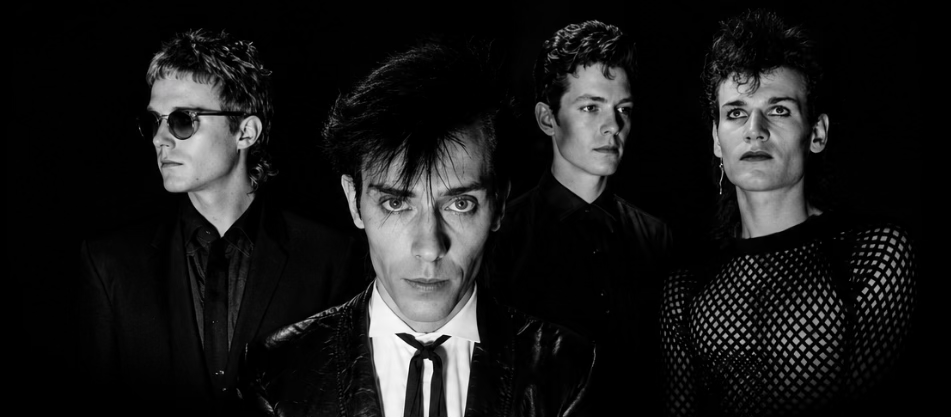
The stark black clothing, dramatic lighting, angular poses, theatrical makeup, expressionless stares, and carefully composed photographs were not fashion statements alone. They reflected the emotional world of the music. Bauhaus created an identity in which image and sound became inseparable.
Murphy’s appearance naturally became one of the band’s defining visual elements. Tall, gaunt, expressive, and charismatic, he seemed to exist somewhere between silent horror cinema, glam rock, German Expressionism, performance art, and classic Hollywood. Yet his appearance never overshadowed the music. It extended the atmosphere already present in the songs.
Ash projected something equally distinctive. Whether standing almost motionless while coaxing impossible sounds from his guitar or quietly manipulating feedback between phrases, he rarely performed with traditional rock swagger. His calm concentration made the strange sounds from his amplifiers feel even more mysterious.
David J and Haskins completed the picture. Their understated presence strengthened the group’s unity. Bauhaus never felt like one frontman with backing musicians. It felt like a complete artistic collective.
The visual identity of In the Flat Field extended to the album sleeve. Rather than using a conventional publicity photograph, the cover reproduced Duane Michals’ Homage to Puvis de Chavannes. Before the record began, listeners were already entering an artistic world rooted in ambiguity, symbolism, and visual imagination.
The band’s visual language continues to reach beyond music. Fashion photographers borrowed its shadows. Graphic designers embraced its minimalism. Filmmakers explored similar contrasts between darkness and light. Countless gothic, darkwave, industrial, and alternative artists adopted ideas Bauhaus helped establish.
Great art is never confined to one medium. Music becomes image. Image becomes theatre. Theatre becomes atmosphere. Atmosphere becomes identity.
More than four decades later, the world Bauhaus created remains recognizable not because it followed trends, but because it created one.
Influences
David Bowie, Glam Rock, Dub, Punk, Art School, and German Expressionism
No artist creates in isolation. Every great work stands upon ideas that came before it, yet the most influential artists transform those ideas into something unmistakably their own. Bauhaus mastered that transformation.
Among the band’s most significant inspirations was David Bowie. Like Bowie, Bauhaus understood that music could become more than sound. It could include theatre, literature, fashion, visual art, cinema, and performance. Murphy’s commanding stage presence invited comparisons to Bowie, but he developed an identity darker, more mysterious, and more rooted in atmosphere and symbolism.
Glam rock also mattered because it treated identity as performance. Bauhaus absorbed that lesson while stripping away much of glam’s color and replacing it with monochrome tension.
Dub music shaped the band’s sense of space. Dub producers treated the studio as an instrument, manipulating echo, reverb, silence, and stereo placement to create new listening experiences. Bauhaus absorbed these ideas and applied them to post-punk arrangements, allowing instruments to breathe within the stereo field.
Punk provided independence, urgency, and disregard for convention. Bauhaus inherited punk’s adventurous spirit but expanded it through sophisticated arrangements, literary references, visual art, experimental production, and theatrical performance.
Art-school thinking shaped the band just as profoundly. Songs, sleeves, typography, photography, interviews, clothing, lighting, and film references belonged to the same imagined universe.
German Expressionist cinema cast a powerful shadow across the band’s imagination. The dramatic contrasts between light and darkness, distorted emotional landscapes, psychological unease, and dreamlike imagery found in films such as The Cabinet of Dr. Caligari and Nosferatu resonate throughout Bauhaus’ music and visual identity. Horror was never used simply for shock. Bauhaus explored mystery as a form of beauty.
Literature was another recurring source. Oscar Wilde’s The Picture of Dorian Gray is only one example of Murphy’s fascination with writers who explored identity, vanity, morality, and hidden inner life.
The remarkable thing is how completely these influences disappear inside the finished work. One can hear traces of Bowie, glam, punk, dub, expressionism, literature, and horror cinema, yet none dominate. They dissolve into something original.
That may be Bauhaus’ greatest artistic lesson: originality rarely comes from having no influences. It comes from transforming your influences until they become uniquely your own.
Legacy
The Album That Changed Gothic Rock
When In the Flat Field was released on November 7, 1980, its reception was far from universally enthusiastic. Some British critics dismissed the album as bleak, self-indulgent, or confrontational. For many listeners at the time, Bauhaus simply sounded unlike anything else. The record challenged expectations of what post-punk could become, and not everyone was ready to follow.
History often tells a different story than first reviews.
More than four decades later, In the Flat Field is widely recognized as one of the most influential debut albums in alternative music. What initially puzzled some critics would inspire generations of musicians, producers, photographers, filmmakers, designers, writers, and visual artists who discovered that darkness could possess elegance, intelligence, mystery, and beauty.
Although Bauhaus never claimed to invent gothic rock, it is difficult to imagine the genre developing the same way without them. Their music provided a blueprint that countless artists would reinterpret: atmosphere over convention, visual identity over casual image, mood over commercial expectation, and mystery over explanation.
The influence reached beyond gothic rock. Elements of Bauhaus can be heard throughout industrial music, darkwave, shoegaze, alternative rock, post-rock, and experimental music. Their visual language echoed through fashion photography, graphic design, stage presentation, and film.
One reason the album endures is that it refuses to become trapped within its era. It was not built around fashionable production techniques or commercial trends. It was built upon atmosphere, curiosity, originality, emotional honesty, and artistic conviction. Those qualities age differently than technology or fashion.
Perhaps Bauhaus’ greatest achievement was proving that artistic ambition and emotional impact do not have to oppose one another. A rock band could reference literature, silent cinema, horror, fine art, philosophy, religion, experimental production, photography, and visual design while still creating music that felt immediate and unforgettable.
Today, In the Flat Field remains more than an influential debut album. It is a reminder that originality requires courage. Bauhaus never followed a map. They drew one.
For musicians, filmmakers, photographers, writers, designers, and artists of every discipline, that may be the album’s greatest legacy. It encourages creators not to imitate successful ideas, but to pursue their own vision with complete conviction.
Every generation discovers In the Flat Field for the first time. Every generation seems to arrive at the same conclusion: there has never been another album quite like it.
Conclusion
Why In the Flat Field Still Matters
Some albums become successful. Some become influential. A very small number change the language of music itself.
In the Flat Field belongs in that final category.
When Bauhaus entered the studio in 1980, they were not attempting to create a genre. They were following their curiosity wherever it led. They ignored convention, rejected easy categorization, and trusted their instincts completely. In doing so, they produced one of the most original debut albums in modern music.
More than four decades later, the record continues to feel immediate. Its production remains spacious and adventurous. Its performances remain fearless. Its atmosphere remains immersive. Its mysteries remain unsolved.
Perhaps that is why each return feels different. The listener changes. Experience changes. Perspective changes. The album continues revealing details that may have gone unnoticed before.
Ash’s guitar still sounds unlike anyone else’s. David J’s melodic bass continues revealing hidden conversations beneath the surface. Haskins’ dynamics and restraint quietly shape every emotional turn. Murphy’s voice continues drawing listeners into a world that feels theatrical and deeply human.
Together they achieved something rare: four musicians creating music none of them could have created alone.
That collaboration remains one of the album’s greatest lessons. Originality is rarely the result of one brilliant individual working in isolation. More often, it emerges when several unique voices trust one another completely.
The album also reminds us that great art rarely arrives by following trends. It arrives when artists are willing to ignore them. Bauhaus never chased popularity, fashion, or safety. Ironically, that decision made countless artists want to follow them.
For new listeners, In the Flat Field remains an invitation. For longtime admirers, it remains a destination worth revisiting.
The record ends. The atmosphere never does.
About the Author
Joe Chopski is a singer-songwriter, filmmaker, record producer and founder of DARKWAVE Magazine.
His work explores the intersection of music, film, visual art, and cultural history, with a particular interest in the creative processes behind influential artists and landmark works. His research focuses on music history, recording techniques, production methods, filmmaking, visual storytelling, and the ideas that continue to shape generations of artists.
Through DARKWAVE, Joe Chopski and contributing writers publish research-driven articles that explore the history, context, and creative process behind influential works of art. The magazine is built on the belief that curiosity is more valuable than criticism, and that understanding the creative journey can be just as rewarding as experiencing the finished work.
Rather than publishing opinions, reviews, ratings, or rankings, DARKWAVE exists to explore how and why great art is created. The magazine is founded on the belief that art is not a competition. Every artist has something to teach us, and every great work has a story worth discovering. Each article is written to inform, inspire, and encourage readers to look deeper into the people, places, ideas, and creative decisions behind enduring works of art.
As a musician and filmmaker, Chopski brings both historical research and firsthand creative experience to his writing, approaching every subject with curiosity, accuracy, and deep respect for the artists and their work.